22 Jan 2026
30 Jul 2026
The Lately Show #2
The Lately Show is back and this time I’m confident I’ll be posting more often.
The Lately Show is back and this time I’m confident I’ll be posting more often.
Stop optimizing wellness
When it comes to wellness, people have become obsessed with measuring and tracking everything from calorie intake to Strava runs to sleep quality.
But every time most people zig, you’ll find a few rebels who prefer to zag, and this counter-movement, which Dazed is calling “Unquantified Wellness,” is worth paying attention to.
Some people are giving up their smartwatches for reiki, somatic therapy or simply standing barefoot at the park. This is a particular persona. They’re also into manifesting and astrology. They’re wrong about astrology, but they’re right about this.
The thing is, wellness had not only become too obsessed with data, it also became too performative. At best, this movement will inspire some of us to take care of our bodies in a way that is not only more intuitive but also less superficial.
However, if brands aren’t mindful about how they get involved, a dark future can manifest itself, a future that might already be here since a two-day ticket for the recent Healf HX26 “anti-optimization” meeting was up to £725.
If I were a wellness brand, I’d think the right move would be to change the narrative from encouraging people to become a “better self” to supporting them as they connect to their “real self”. (We might be one Nike ad away from this trend going macro.)
Stop optimizing wellness
Stop optimizing wellness
When it comes to wellness, people have become obsessed with measuring and tracking everything from calorie intake to Strava runs to sleep quality.
But every time most people zig, you’ll find a few rebels who prefer to zag, and this counter-movement, which Dazed is calling “Unquantified Wellness,” is worth paying attention to.
Some people are giving up their smartwatches for reiki, somatic therapy or simply standing barefoot at the park. This is a particular persona. They’re also into manifesting and astrology. They’re wrong about astrology, but they’re right about this.
The thing is, wellness had not only become too obsessed with data, it also became too performative. At best, this movement will inspire some of us to take care of our bodies in a way that is not only more intuitive but also less superficial.
However, if brands aren’t mindful about how they get involved, a dark future can manifest itself, a future that might already be here since a two-day ticket for the recent Healf HX26 “anti-optimization” meeting was up to £725.
If I were a wellness brand, I’d think the right move would be to change the narrative from encouraging people to become a “better self” to supporting them as they connect to their “real self”. (We might be one Nike ad away from this trend going macro.)
When it comes to wellness, people have become obsessed with measuring and tracking everything from calorie intake to Strava runs to sleep quality.
But every time most people zig, you’ll find a few rebels who prefer to zag, and this counter-movement, which Dazed is calling “Unquantified Wellness,” is worth paying attention to.
Some people are giving up their smartwatches for reiki, somatic therapy or simply standing barefoot at the park. This is a particular persona. They’re also into manifesting and astrology. They’re wrong about astrology, but they’re right about this.
The thing is, wellness had not only become too obsessed with data, it also became too performative. At best, this movement will inspire some of us to take care of our bodies in a way that is not only more intuitive but also less superficial.
However, if brands aren’t mindful about how they get involved, a dark future can manifest itself, a future that might already be here since a two-day ticket for the recent Healf HX26 “anti-optimization” meeting was up to £725.
If I were a wellness brand, I’d think the right move would be to change the narrative from encouraging people to become a “better self” to supporting them as they connect to their “real self”. (We might be one Nike ad away from this trend going macro.)

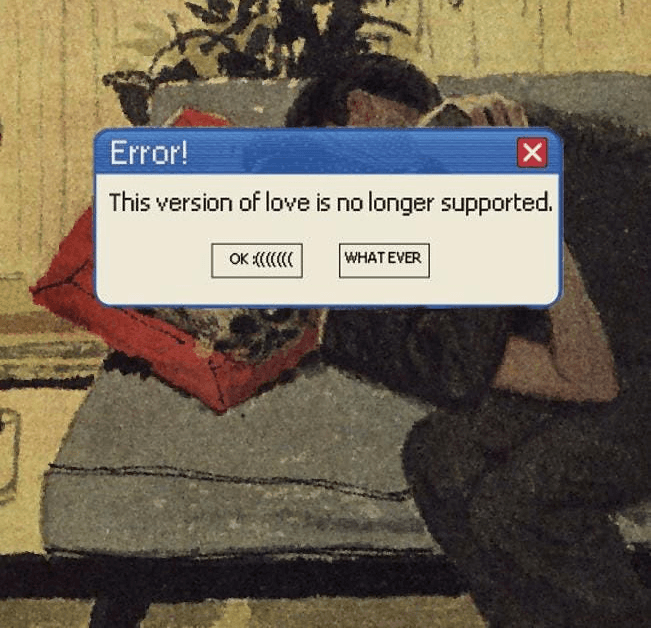
Start optimizing romance?
WYou just got home after a first date. You’re evaluating how you feel after spending time with this new person. You like them, you didn’t see any flagrant red flags, but it’s also true that there were some awkward silences, and you’re unsure about what to think about their unpopular opinions and random takes.
Then you talk about them to your friends. This changes how you perceive them. Suddenly, where you saw confidence, now you see obnoxiousness. If they seemed chill, now they seem boring.
But then comes a Friday night and you have no plans and you think of texting them again to give them a chance but they just posted a story at a party with friends. You open your dating app and you have no new matches. And now you want them again, before they get away. You don’t mind someone being self-assured, and they have plenty of other qualities.
Time is tricky like that. It’s not always easy to trust our intuition about someone. There are so many things that can influence it. If only there were an app that tracked all of your dates and translated them into data so you could make a rational assessment about potential partners.
That’s exactly what Spread does. This new app created by Sampson Ezieme allows you to score your dates across different categories and even enter feedback from friends, then it calculates your compatibility with someone.
People are into it. So much so that they are refraining from deciding whether their dates went well before they crunch the numbers, as reported by The Wall Street Journal.
The natural conclusion, from a communication perspective, is that this creates an opportunity to make a case rather than just make an impression. As consumers become more analytical, brands in the dating space can use evidence to reinforce why something is worth choosing. Right? It seems counterintuitive that a sector as emotional as dating should communicate more rationally.
The first thing that came to mind was a How I Met Your Mother episode called Matchmaker (season 1, episode 7). In the series’ universe there’s a service called “Love Solutions” and their communication is all about evidence and “science.”
Perhaps that’s everything that we always wanted dating services to be, if that’s how they advertise themselves in our collective fantasies (I mean, popular TV series).
“A prediction market is like the stock market, but instead of buying and selling companies, you’re buying ‘yes’ and ‘no’ on whether something is going to happen or not.” That’s according to Tarek Mansour and Luana Lopes Lara, the founders of Kalshi (one of the two big players in this space alongside Polymarket).
Prediction markets aren’t a new thing. They have existed since the late 80s, but until recently, the Commodity Futures Trading Commission (CFTC) only allowed them to exist for educational
and research purposes.
Today, Kalshi’s CEO is saying “the long-term vision is to financialize everything and create a tradable asset out of any difference
in opinion.”
These companies do loads of advertising and they’re trying hard
to position themselves as different from gambling. They argue that the difference is that with gambling you bet against the house,
and in a prediction market you put your money on an opinion, against the people that make the opposed bet, and the platform takes a percentage of the winner’s gains.
Since early 2024, prediction markets’ volume has skyrocketed from $100 million to $13 billion per month according to Keyrock
and Dune Analytics, and the owner of the New York Stock Exchange, Intercontinental Exchange, has recently invested
$2 billion on Polymarket.
Proponents of these platforms are calling them “truth machines” fueled by the “wisdom of the crowds.“ The argument is that prices are a better indicator of what is going to happen than polls or other methods. (Polymarket did predict the winner of the last US election earlier than most reputable news outlets.)
You just got home after a first date. You’re evaluating how you feel after spending time with this new person. You like them, you didn’t see any flagrant red flags, but it’s also true that there were some awkward silences, and you’re unsure about what to think about their unpopular opinions and random takes.
Then you talk about them to your friends. This changes how you perceive them. Suddenly, where you saw confidence, now you see obnoxiousness. If they seemed chill, now they seem boring.
But then comes a Friday night and you have no plans and you think of texting them again to give them a chance but they just posted a story at a party with friends. You open your dating app and you have no new matches. And now you want them again, before they get away. You don’t mind someone being self-assured, and they have plenty of other qualities.
Time is tricky like that. It’s not always easy to trust our intuition about someone. There are so many things that can influence it. If only there were an app that tracked all of your dates and translated them into data so you could make a rational assessment about potential partners.
That’s exactly what Spread does. This new app created by Sampson Ezieme allows you to score your dates across different categories and even enter feedback from friends, then it calculates your compatibility with someone.
People are into it. So much so that they are refraining from deciding whether their dates went well before they crunch the numbers, as reported by The Wall Street Journal.
The natural conclusion, from a communication perspective, is that this creates an opportunity to make a case rather than just make an impression. As consumers become more analytical, brands in the dating space can use evidence to reinforce why something is worth choosing. Right? It seems counterintuitive that a sector as emotional as dating should communicate more rationally.
The first thing that came to mind was a How I Met Your Mother episode called Matchmaker (season 1, episode 7). In the series’ universe there’s a service called “Love Solutions” and their communication is all about evidence and “science.”
Perhaps that’s everything that we always wanted dating services to be, if that’s how they advertise themselves in our collective fantasies (I mean, popular TV series).

Or just let AI find you a match
Another dating story.
The guy who built Hinge just raised $18 million… to make an anti-swiping dating app.
His new company, Overtone, is built around voice interactions. You talk, AI listens, AI matches you. There’s some effort involved in recording a voice note or even listening to one, and I don’t know whether that will make this successful or ultimately cause it to fail
But The Match Group, the company that owns Hinge, Tinder, and others, is investing in this. IIt’s interesting to see them betting on themselves being disrupted before someone else disrupts them.
This comes at a time when 78% of dating app users say they’re burnt out. People are tired of swiping like it’s a slot machine.
Simultaneously, perceptions of what we trust AI with are changing.
I have many friends who have told me they use AI as a therapist, so why not trust it as a matchmaker?
It’s cool to see that brands are betting on curation over infinite catalogues and endless scrolling and I’m curious to see how other categories might follow and, especially, how this will be communicated.
Then, because this brand is all about sound I’m also looking out for their sonic branding.
And finally, something I’ve noticed is that in their communication, they’re already highlighting that they will explain to each match why AI matched them with that person and this kind of AI explaining itself might become a new way of gaining trust and even a new trust standard.
“A prediction market is like the stock market, but instead of buying and selling companies, you’re buying ‘yes’ and ‘no’ on whether something is going to happen or not.” That’s according to Tarek Mansour and Luana Lopes Lara, the founders of Kalshi (one of the two big players in this space alongside Polymarket).
Prediction markets aren’t a new thing. They have existed since the late 80s, but until recently, the Commodity Futures Trading Commission (CFTC) only allowed them to exist for educational
and research purposes.
Today, Kalshi’s CEO is saying “the long-term vision is to financialize everything and create a tradable asset out of any difference
in opinion.”
These companies do loads of advertising and they’re trying hard
to position themselves as different from gambling. They argue that the difference is that with gambling you bet against the house,
and in a prediction market you put your money on an opinion, against the people that make the opposed bet, and the platform takes a percentage of the winner’s gains.
Since early 2024, prediction markets’ volume has skyrocketed from $100 million to $13 billion per month according to Keyrock
and Dune Analytics, and the owner of the New York Stock Exchange, Intercontinental Exchange, has recently invested
$2 billion on Polymarket.
Proponents of these platforms are calling them “truth machines” fueled by the “wisdom of the crowds.“ The argument is that prices are a better indicator of what is going to happen than polls or other methods. (Polymarket did predict the winner of the last US election earlier than most reputable news outlets.)



" height="20.5755px" id="mdSXxnMtE" width="18px"/></svg>)
